What is the Difference between Regular Email and Anonymous Email?
Most people use a regular email address every day without thinking much about it. But there is a second category of email that serves a completely different purpose - anonymous or temporary email. Understanding the difference between the two, and knowing when each one is appropriate, is one of the more practical things you can do for your online privacy.
What is a Regular Email Address?
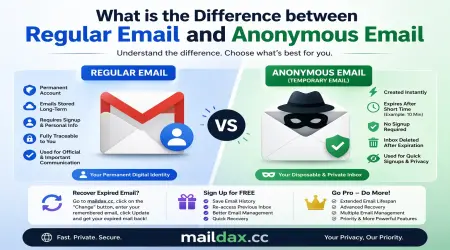
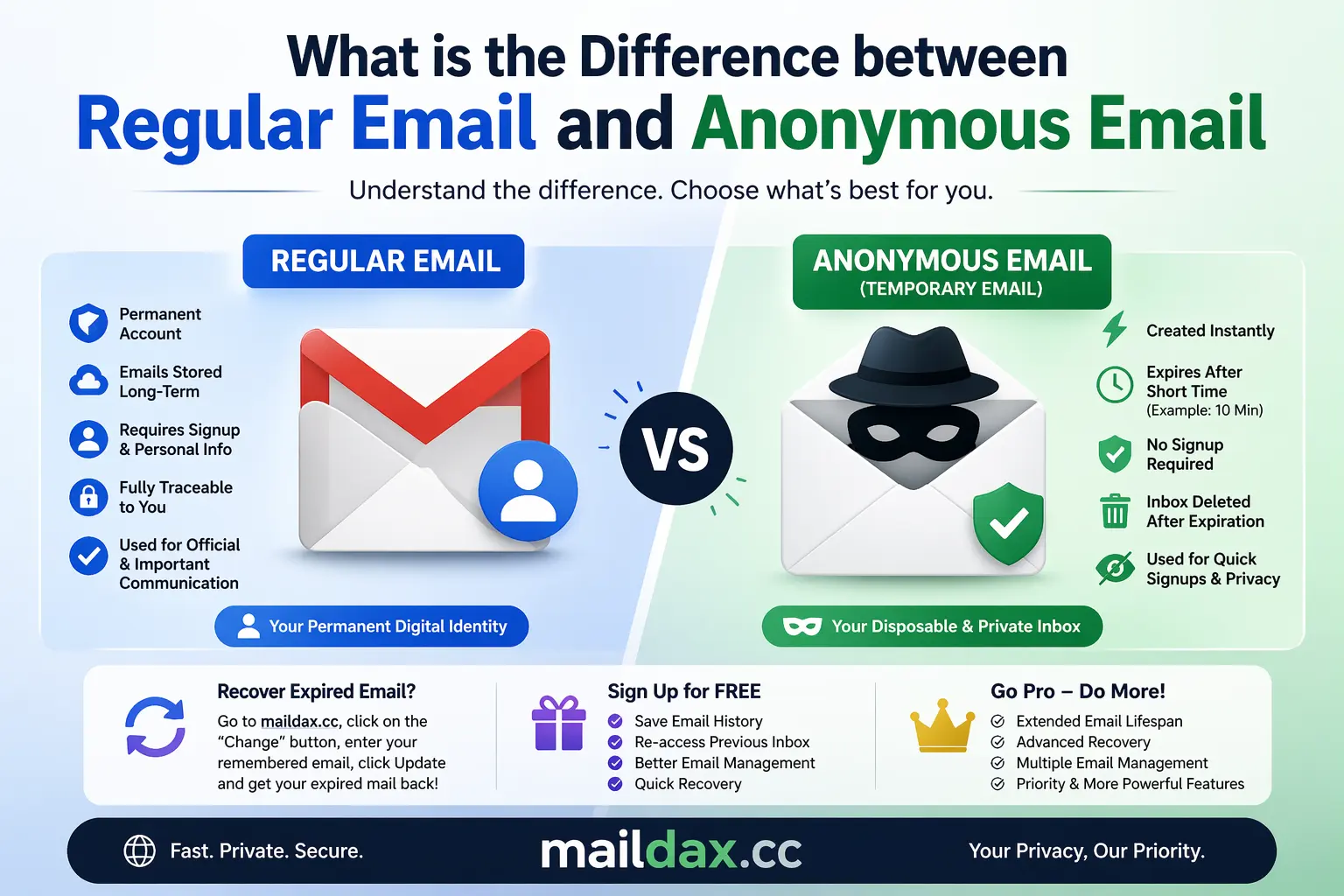
A regular email account - Gmail, Outlook, Yahoo, or any provider - is a permanent digital identity. When you create one, you provide personal information, often including your name, phone number, and date of birth. That account is then linked to you indefinitely.
Your regular email becomes the central hub of your online life. It connects to your bank, your social media accounts, your work communication, your subscriptions, and your account recovery options across dozens or hundreds of services.
The permanence is the point. A regular email account is designed to be yours forever, accessible from any device, with a full history of every message you have ever sent or received.
Key characteristics:
- Requires registration with personal details
- Permanent and long-term
- Fully traceable to the account owner
- Connected to your broader digital identity
- Stores messages indefinitely unless deleted
- Used for official, financial, and professional communication
What is an Anonymous or Temporary Email Address?
An anonymous email address - also called a disposable or temporary email - is a short-lived inbox with no personal identity attached to it. You do not register, you do not provide your name, and you do not choose a password. The address is generated automatically and expires after a set period.
The anonymity comes from the disconnection. There is no account tied to your identity, no history linking back to you, and no ongoing relationship with the service provider. When the address expires, it simply ceases to exist.
Key characteristics:
- No registration or personal details required
- Generated instantly and automatically
- Expires after a set time period
- No traceable connection to your identity
- Used for one-time or short-term interactions
- Messages are permanently deleted on expiry
The Core Difference - Permanence vs Privacy
The fundamental distinction between regular and anonymous email is not about features. It is about purpose.
Regular email is built for permanence and identity. It is your official presence in the digital world. Every important account, every professional relationship, every financial service needs a permanent email address it can reach you at reliably.
Anonymous email is built for privacy and disposability. It is a tool for situations where you need to receive an email - usually a verification or confirmation - without creating any lasting connection between yourself and the service you are signing up for.
Neither is better than the other. They serve different purposes and the skill is knowing which one fits each situation.
Real-World Situations - Which One Fits?
Use your regular email for:
Your bank and financial accounts - These require permanent, reliable access. Security alerts and fraud notifications need to reach you immediately and reliably.
Work and professional communication - Your employer, clients, and professional contacts need a consistent way to reach you. A permanent address you control is essential.
Services you use every day - Streaming platforms, cloud storage, apps you rely on - all of these need a permanent email for account recovery and billing.
Important personal accounts - Social media accounts you actively use, healthcare portals, government services - all require a permanent address.
Use an anonymous email for:
Downloading free resources - When a website requires an email to access a PDF, template, or eBook but you have no interest in their newsletter.
Testing a new service - Before committing your real identity to a new platform, an anonymous address lets you explore it without consequences.
One-time verifications - When you need to confirm an account or action once and have no plans to return to the service.
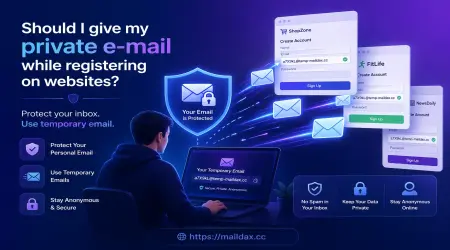
Protecting yourself from unknown sites - When you are unsure how a website handles data, an anonymous address limits your exposure.
What Anonymous Email Cannot Do
It is worth being clear about the limitations of anonymous email, because misusing it creates real problems.
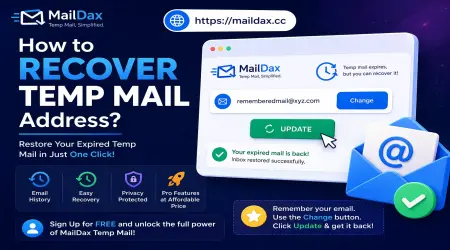
You cannot use it for account recovery. If you forget your password on a service linked to an anonymous address that has since expired, you have no recovery option.
You cannot use it for ongoing communication. Any service that sends you regular updates, alerts, or messages you actually want to receive needs your real address.
You cannot use it for anything sensitive. Anonymous inboxes are not encrypted or secured in the way a private email account is. They are designed for low-stakes, one-time interactions.
The Practical Takeaway
Think of regular email and anonymous email as two different tools in your online privacy toolkit - like a permanent home address versus a PO box you rent for a month.
Your home address is for people and institutions who genuinely need to know who you are and where to reach you. Your temporary PO box is for situations where you need to receive something without giving away your permanent address.
Use each one for what it was designed for, and your inbox - and your privacy - will be significantly easier to manage.