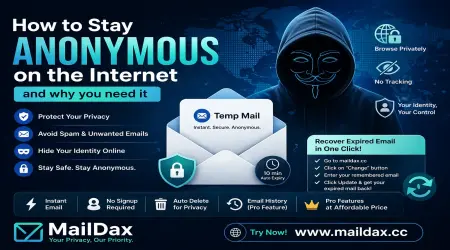
How to stay anonymous on the Internet & Why you Need it?
Most guides about online anonymity focus on VPNs, Tor browsers, and advanced technical tools. But for most people, the biggest privacy leak happens in a much simpler and more everyday situation - signing up for a website.
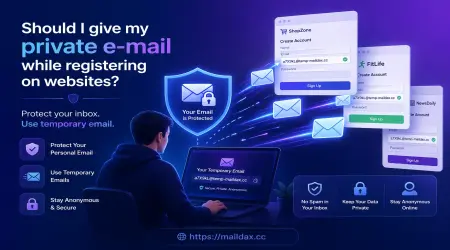
Every time you create an account somewhere online, you hand over at least one piece of personal information: your email address. That single action connects your identity to that website, potentially forever. This guide focuses specifically on how to protect your privacy at that moment - the signup.
Why Signups Are Your Biggest Privacy Vulnerability
When you sign up for a website with your real email address, several things happen simultaneously:
Your address is added to their database. That database may be shared with advertising partners, analytics services, or data brokers. It may be breached by hackers. It may be sold if the company changes ownership.
You begin receiving emails. Some are useful. Many are not. Unsubscribing helps but does not guarantee removal from all lists, particularly if your data has already been shared.
Your identity becomes linkable. If you use the same email address across multiple platforms, those platforms can potentially be linked to the same person - you. Data brokers actively compile these connections to build detailed profiles of individuals.
None of this requires anything malicious on the website's part. It happens through normal, legal business practices that most websites engage in routinely.
Practical Steps to Stay Anonymous When Signing Up
Step 1 - Use a temporary email address for low-trust signups
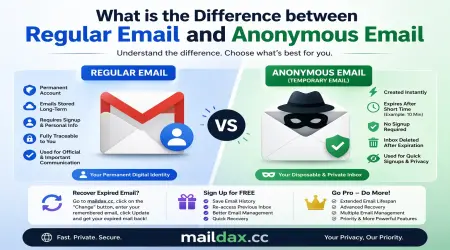
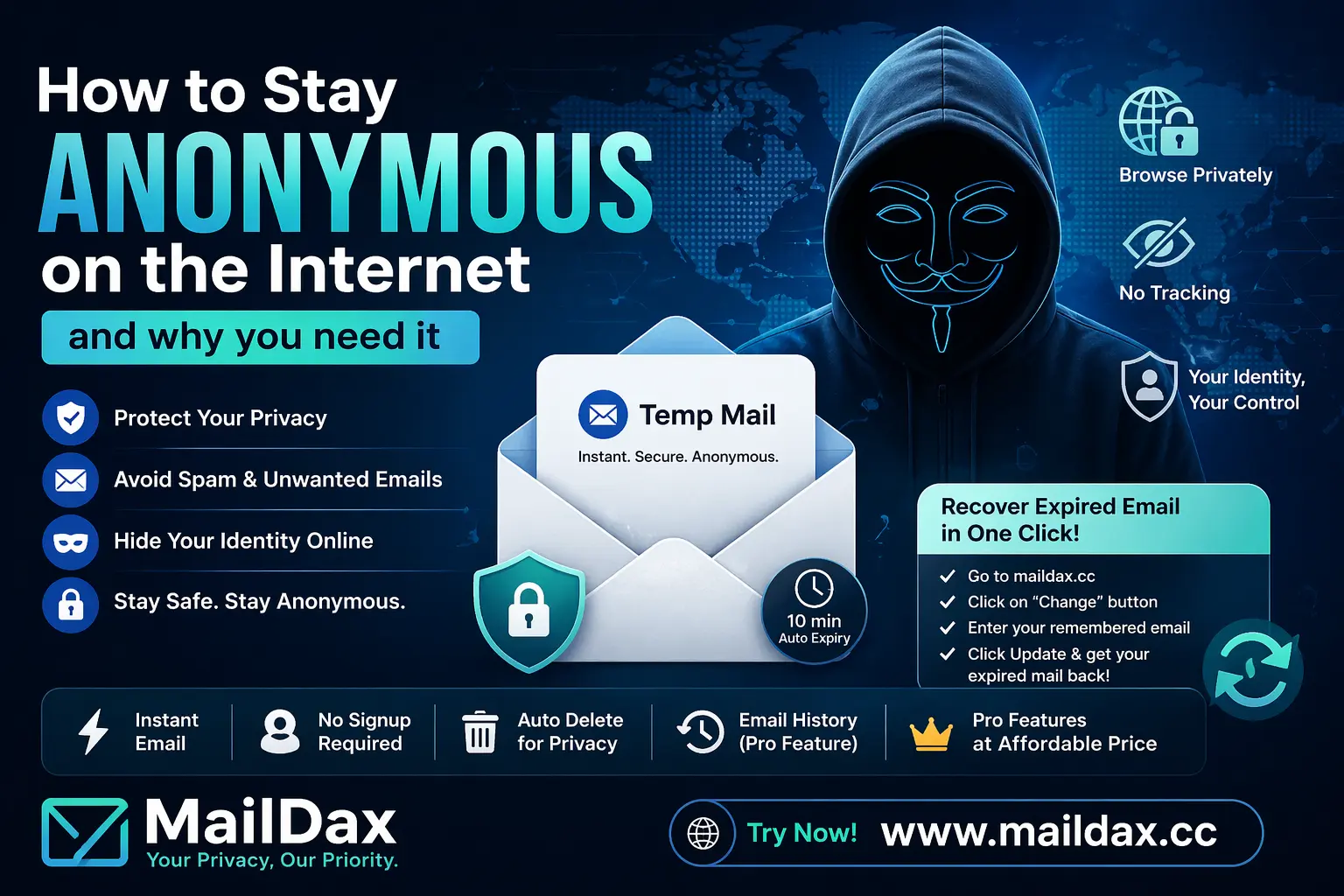
For any website you are visiting for the first time, downloading a single resource from, or testing without commitment - use a disposable email address instead of your real one. This severs the connection between your identity and that website entirely.
A temporary address receives the verification email, confirms your account, and then expires. The website has an email address in their database but it leads nowhere and connects to no one.
Step 2 - Create a separate permanent email for non-essential signups
For websites you plan to use regularly but do not consider essential, consider maintaining a secondary permanent email address - separate from your main one - specifically for online signups. This is not as private as a temporary address but it keeps your primary inbox clean and limits the damage if that secondary address ends up in a breach.
Step 3 - Use a different username on each platform
If you use the same username across multiple platforms, those accounts can be linked to each other even without your email address. Using different usernames for different services makes it significantly harder to build a profile of your online activity.
Step 4 - Check the privacy policy before signing up
Before entering your email on any website, take 60 seconds to look at their privacy policy. Specifically look for whether they share data with third parties, whether they sell personal information, and how long they retain your data. If the policy is vague, missing, or explicitly mentions selling data - use a temporary address.
Step 5 - Use a password manager
This is slightly adjacent to anonymity but directly relevant to signup security. A password manager allows you to create unique, strong passwords for every account you create. This prevents a breach on one site from compromising your accounts on others.
Step 6 - Be cautious about what information you fill in beyond the required fields
Most signup forms ask for more information than they actually need to create your account. Fields asking for your phone number, date of birth, gender, or location are often optional. Fill in only what is genuinely required and leave optional fields blank.
What Anonymity Cannot Protect You From
Being honest about limitations is important here.
A temporary email address protects your inbox and severs the email-to-identity link. It does not hide your IP address from the website, prevent browser fingerprinting, or stop cookies from tracking your session. For most everyday signups, that level of protection is more than sufficient. For situations requiring deeper anonymity, additional tools like a VPN are appropriate.
The Realistic Goal
Complete anonymity online is difficult to achieve and unnecessary for most people. The realistic and achievable goal is reducing your exposure - making it harder for data brokers, advertisers, and potential bad actors to build a complete picture of who you are and what you do online.
Using a temporary email for low-trust signups is one of the simplest and most effective steps toward that goal. It costs nothing, takes seconds, and has an immediate and permanent effect on how much of your identity you share with the websites you visit.