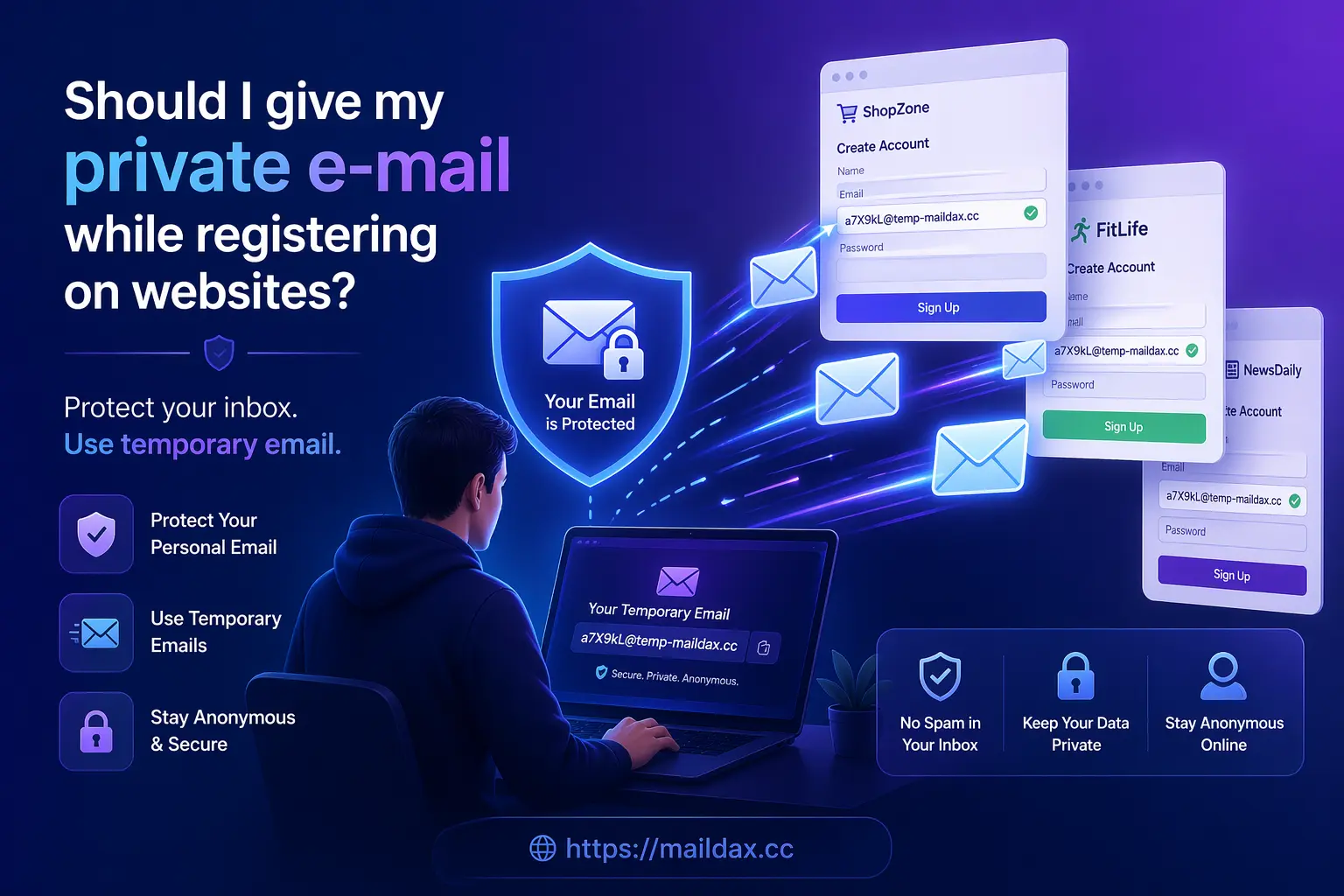
Should I Give My Private Email While Registering on Websites
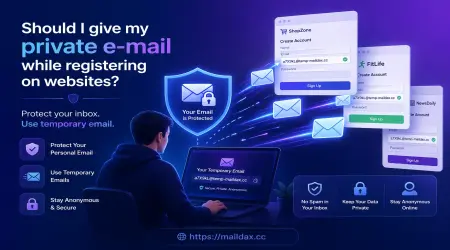
This is one of the most common questions people ask about online privacy - and the honest answer is: it depends entirely on the website and what you are signing up for.
There is no single rule that fits every situation. Using your real email address is sometimes the right choice. Using a temporary address is sometimes the right choice. Knowing which is which is what actually protects your privacy.
When Your Real Email Address is the Right Choice
Some situations genuinely require your real email - and trying to use a temporary address in these cases will only cause problems for you.
Financial services and banking Any account involving money - your bank, PayPal, investment platforms, cryptocurrency exchanges - must be linked to a real, permanent email address you control. Security alerts, transaction confirmations, and account recovery all depend on that email being accessible long term.
Services you use regularly If you plan to log back into a website more than once, use your real email. Temporary addresses expire. When they do, you lose access to password resets and login verifications permanently.
Work and professional tools Any platform you use for work - project management tools, communication apps, professional networks - should be connected to a permanent email. Losing access because a temporary address expired creates real professional problems.
Healthcare and government services Medical platforms, government portals, and any service holding sensitive personal information requires a verified, permanent email for security and compliance reasons.
Brands and services you genuinely trust If you are signing up with a well-known, established company whose emails you actually want to receive - use your real address. There is no benefit to using a temporary one.
When You Should Not Give Your Real Email
These are the situations where protecting your real address makes clear sense.
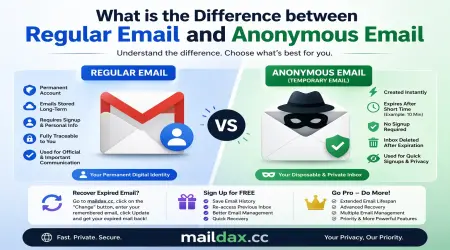
Websites you are visiting for the first time You have no way of knowing how a new website handles your data until you have had some experience with it. On a first visit - especially to download something or access a trial - a temporary address protects you while you evaluate whether the site is trustworthy.
Gated content downloads Many websites require an email address purely to give you access to a PDF, template, checklist, or eBook. In most cases they are collecting emails for their mailing list. If you want the resource but not the ongoing emails, a temporary address is the appropriate tool.
One-time verifications Sometimes you need to verify an account or confirm an action just once, with no intention of returning to the service. A temporary address handles the verification and then expires cleanly.
Websites with unclear privacy policies Before giving any website your real email, it is worth checking their privacy policy. If they share data with third parties, sell email lists, or have vague data handling practices — use a temporary address.
Sites that seem primarily focused on collecting emails If signing up feels like the entire point of the website - rather than accessing a genuine service - treat that as a warning sign and use a disposable address.
The Real Risks of Giving Your Email to the Wrong Sites
When you share your real email with websites that handle it poorly, the consequences range from annoying to genuinely harmful.
Spam is the most common outcome. Your address gets added to mailing lists, sometimes sold to other list owners, and you begin receiving promotional emails from companies you have never heard of.
Data breaches are a more serious risk. When websites store your email address in their database and that database is compromised, your email ends up in the hands of spammers and phishing operators. This happens far more often than most people realise - there have been thousands of significant data breaches affecting hundreds of millions of email addresses in the past decade alone.
Phishing becomes more targeted. Once your email address is in circulation among bad actors, you become a target for phishing attempts - fake emails designed to look like they come from your bank, your email provider, or services you use.
A Practical Framework for Deciding
Before entering your email address on any website, ask yourself these questions:
- Will I need to access this account again in the future?
- Does this website handle sensitive personal or financial information?
- Do I trust this website with my real identity?
- Do I actually want to receive ongoing emails from this sender?
If you answered yes to all four - use your real email. If you answered no to any of them - consider using a temporary address for that interaction.
The Bottom Line
Your real email address is connected to your identity, your financial accounts, your work, and your online security. It is worth protecting. That does not mean never sharing it - it means sharing it thoughtfully, with services that deserve that trust.
For everything else, a temporary email address is not a workaround or a trick. It is the appropriate tool for the job.